Buy كا.com ?
We are moving the project
كا.com .
Are you interested in purchasing the domain
كا.com ?
domain@kv-gmbh.de · 0541-91531010
Buy كا.com ?
What is the formal language in mathematics?
The formal language in mathematics is a precise and structured way of communicating mathematical ideas and concepts. It uses symbols, variables, and logical symbols to represent mathematical relationships and operations. This language helps to eliminate ambiguity and ensure that mathematical statements are clear and unambiguous. By using a formal language, mathematicians can communicate complex ideas in a concise and rigorous manner. **
Is mathematics a human or divine language?
Mathematics is considered a human language as it is a system of symbols and rules created by humans to describe and understand the world around us. It is a tool developed by humans to quantify and analyze patterns and relationships. While some may argue that the consistency and universality of mathematical principles suggest a divine origin, the consensus among mathematicians and scholars is that mathematics is a product of human intellect and creativity. **
Similar search terms for Mathematics
Top-Angebote
Products related to Mathematics:
-
From the Archives: Black History and Culture Value PackThis brand-new series is rooted in a profound commitment to shedding light on some of the important -- and often lesser-known -- aspects of Black history. From the Archives features landmarks, events, people, and artistic endeavors that have played...27,99 $*Shipping: 0,00 $Secure redirect to the provider
-
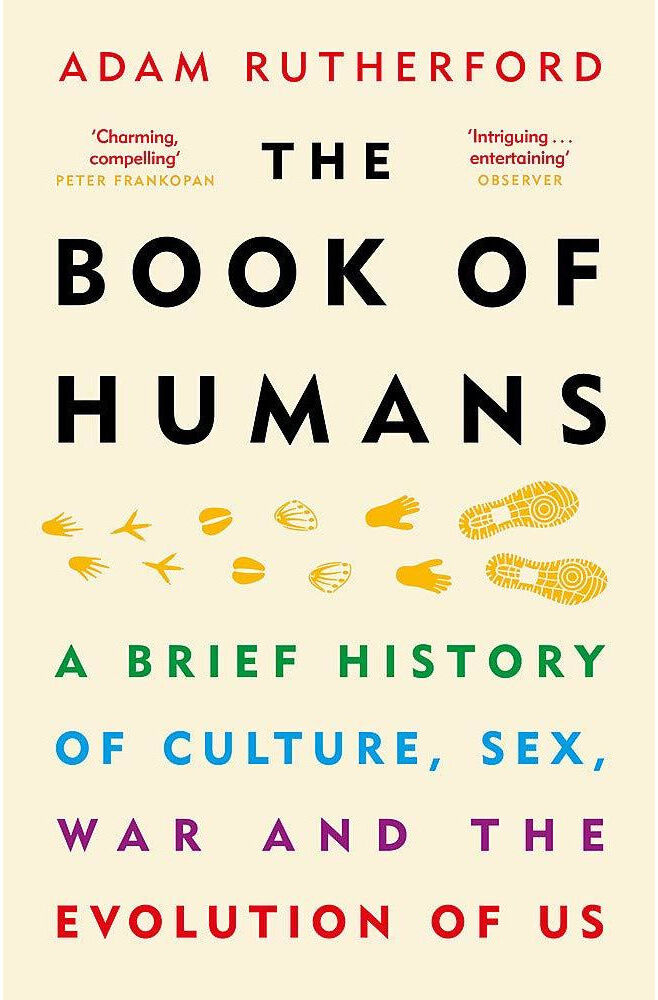
Orion The Book of Humans by Adam Rutherford – A Brief History of Culture, Sex, War & EvolutionWHAT MAKES US HUMAN? Waging war? Sex for pleasure? Creating art? Mastery of fire? In this thrilling tour of the animal kingdom, Adam Rutherford tells the story of how we became the unique creatures we are today. Illuminated by the latest scientific discoveries, THE BOOK OF HUMANS is a dazzling compendium of what unequivocally fixes us as animals, and reveals how we are extraordinary among them.4,98 £*Shipping: 1,99 £Secure redirect to the provider
-
Zygomatic Timeline Refresh 2026 Clutch Box - Card Game for 2-4 Players Ages 10+ History Culture TriviaTest your knowledge of history, culture, and everyday events with Timeline Refresh 2026, a compact card game for family and friends. Each round challenges players to place event cards in the correct chronological position, using the timeline already on the table as their guide. Choose an event card, estimate when it happened, and add it to the timeline. If your placement is correct, the card remains in play; if not, it is removed. The first player to position all their cards correctly wins. The game's accessible rules and varied subject matter make it an engaging way to challenge your memory and learn interesting facts while playing. The clutch box format is designed for convenient storage and portability.9,59 £*Shipping: 3,95 £Secure redirect to the provider
-
"""The Language of Yes""" """The Language of Yes Cuvee Sinso 2022 Red Wine - California""""""A French-inspired, Cinsaut-based red blend. Cinsaut and Syrah co-fermented for two weeks to extract color and texture. A small amount of Grenache from Rancho Réal was blended for fragrance. Aged in neutral barrels and stainless. Exuberantly..."26,97 $*Shipping: 0,00 $Secure redirect to the provider



-
How can one forget culture and heritage?
One can forget culture and heritage by not actively engaging with it, by being disconnected from one's roots and community, and by prioritizing other aspects of life over preserving and celebrating one's cultural identity. This can happen through assimilation into a different culture, lack of exposure to one's own cultural traditions and practices, and a lack of interest in learning about one's heritage. Additionally, societal pressures and discrimination can also contribute to the erasure of one's culture and heritage. **
-
What are the subjects history, mathematics, and English?
History is the study of past events, particularly human affairs. It involves analyzing and interpreting the past to understand how it has shaped the present. Mathematics is the study of numbers, quantities, shapes, and patterns. It involves problem-solving and logical reasoning. English is the study of language, literature, and communication. It involves reading, writing, and analyzing various forms of written and spoken expression. **
-
Does studying mathematics involve learning a programming language?
Studying mathematics does not necessarily involve learning a programming language. While some branches of mathematics, such as computational mathematics or numerical analysis, may require knowledge of programming languages like Python or MATLAB for data analysis and simulations, the core concepts of mathematics can be studied and understood without programming. However, learning a programming language can be a valuable skill for mathematicians as it can aid in solving complex problems and conducting mathematical research efficiently. **
-
Business mathematics or pure mathematics?
It ultimately depends on your career goals and interests. Business mathematics focuses on practical applications in business and finance, such as accounting, economics, and statistics. Pure mathematics, on the other hand, delves into theoretical concepts and abstract reasoning, with applications in fields like physics, engineering, and computer science. If you are interested in pursuing a career in business or finance, business mathematics may be more relevant. However, if you are passionate about theoretical concepts and problem-solving, pure mathematics may be a better fit for you. **
Were there fundamental errors in the history of mathematics?
Yes, there have been fundamental errors in the history of mathematics. One famous example is the case of Euclid's fifth postulate, which was later shown to be independent of the other postulates in Euclidean geometry. This led to the development of non-Euclidean geometries. Additionally, there have been instances of incorrect proofs and assumptions made by mathematicians throughout history, which have later been corrected or disproven. These errors have often led to advancements in the field as mathematicians work to correct and improve upon previous work. **
What is the history of the equation in mathematics?
The history of the equation in mathematics dates back to ancient civilizations such as the Babylonians and Egyptians, who used equations to solve practical problems related to trade, construction, and astronomy. The concept of equations was further developed by Greek mathematicians, such as Diophantus and Euclid, and later by Islamic mathematicians during the Golden Age of Islam. In the 16th century, the Italian mathematician, Rafael Bombelli, made significant contributions to the understanding of complex numbers and their use in solving equations. The development of algebra in the 17th and 18th centuries further advanced the study of equations, leading to the development of various methods for solving them, such as the quadratic formula and the method of substitution. Today, equations are a fundamental part of mathematics and are used in various fields such as physics, engineering, and economics. **
Top-Angebote
Products related to Mathematics:
-
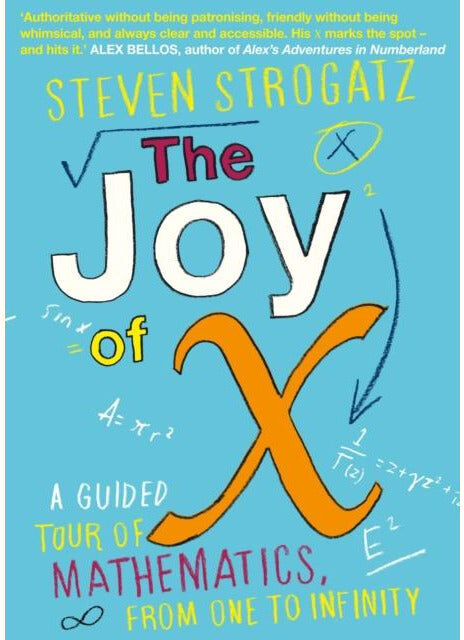
Atlantic Books The Joy of X: A Guided Tour of Mathematics from One to InfinityAward-winning Steven Strogatz, one of the foremost popularisers of maths, has written a witty and fascinating account of maths' most compelling ideas and how, so often, they are an integral part of everyday life. Maths is everywhere, often where we don't even realise. Award-winning professor Steven Strogatz acts as our guide as he takes us on a tour of numbers that - unbeknownst to the unitiated - connect pop culture, literature, art, philosophy, current affairs, business and even every day life. In The Joy of X, Strogatz explains the great ideas of maths - from negative numbers to calculus, fat tails to infinity - with clarity, wit and insight. He is the maths teacher you never had and this book is perfect for the smart and curious, the expert and the beginner.6,99 £*Shipping: 2,99 £Secure redirect to the provider
-
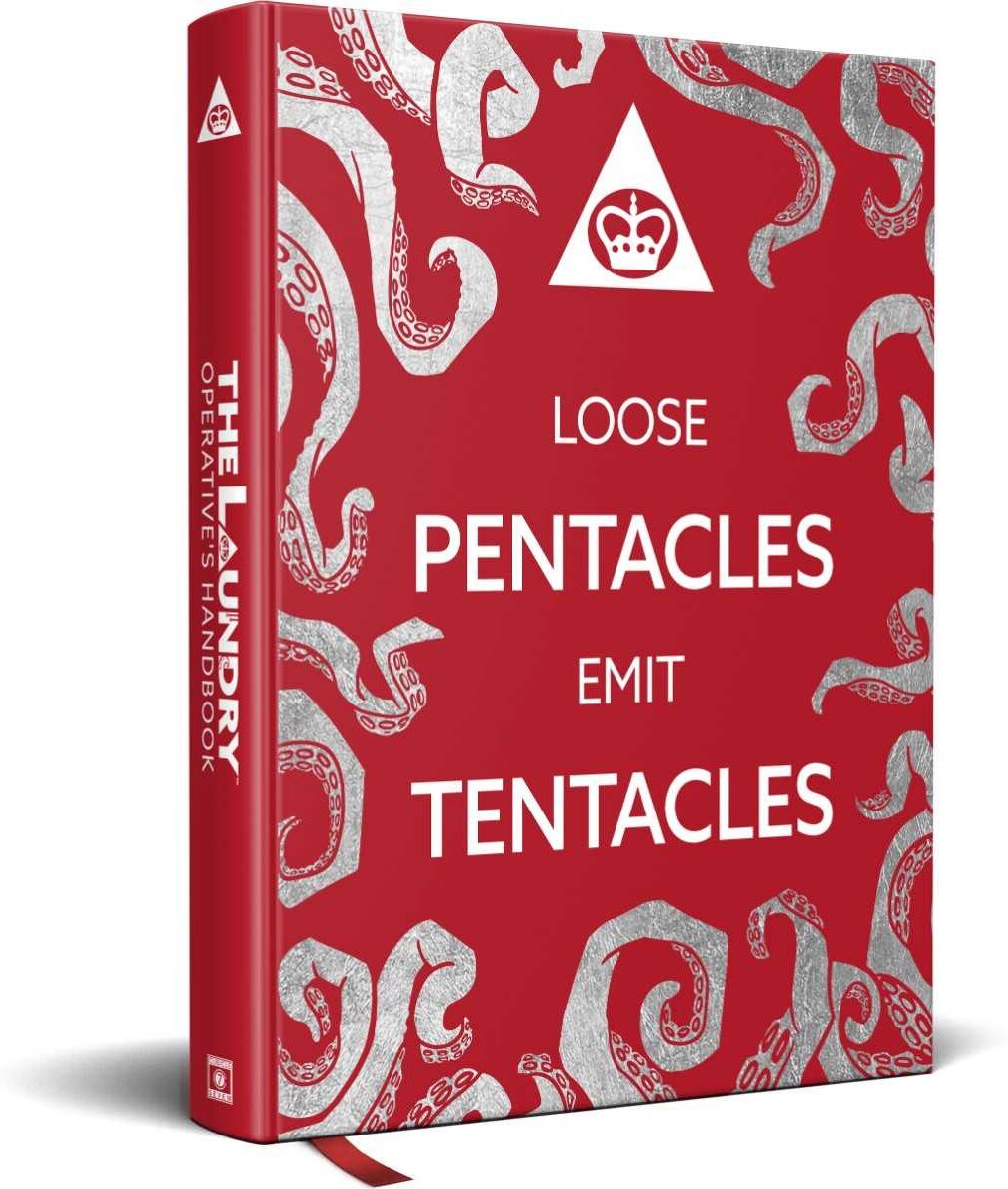
Cubicle 7 The Laundry Roleplaying Game Second Edition Operative’s Handbook Cubicle 7 - Occult Mathematics Roleplaying BookImmerse yourself in the world of occult mathematics and high-tech espionage with The Laundry Roleplaying Game Second Edition: Operative’s Handbook. This supplement is designed for players and agents working within the Laundry organisation, providing operational guidance, restricted equipment, and mission-focused material. Explore settings and threats inspired by the world of The Laundry, and use the handbook to equip your agents for assignments ranging from occult investigations to interdimensional emergencies. Missions may take them from Amsterdam and Saint Martin to Dunwich and Milton Keynes, while equipment such as the Hand of Glory, Basilisk Gun, and Necronomiphone are at their disposal.76,02 £*Shipping: 0,00 £Secure redirect to the provider
-
From the Archives: Black History and Culture Value PackThis brand-new series is rooted in a profound commitment to shedding light on some of the important -- and often lesser-known -- aspects of Black history. From the Archives features landmarks, events, people, and artistic endeavors that have played...27,99 $*Shipping: 0,00 $Secure redirect to the provider
-
Orion The Book of Humans by Adam Rutherford – A Brief History of Culture, Sex, War & EvolutionWHAT MAKES US HUMAN? Waging war? Sex for pleasure? Creating art? Mastery of fire? In this thrilling tour of the animal kingdom, Adam Rutherford tells the story of how we became the unique creatures we are today. Illuminated by the latest scientific discoveries, THE BOOK OF HUMANS is a dazzling compendium of what unequivocally fixes us as animals, and reveals how we are extraordinary among them.4,98 £*Shipping: 1,99 £Secure redirect to the provider
-
What is the formal language in mathematics?
The formal language in mathematics is a precise and structured way of communicating mathematical ideas and concepts. It uses symbols, variables, and logical symbols to represent mathematical relationships and operations. This language helps to eliminate ambiguity and ensure that mathematical statements are clear and unambiguous. By using a formal language, mathematicians can communicate complex ideas in a concise and rigorous manner. **
-
Is mathematics a human or divine language?
Mathematics is considered a human language as it is a system of symbols and rules created by humans to describe and understand the world around us. It is a tool developed by humans to quantify and analyze patterns and relationships. While some may argue that the consistency and universality of mathematical principles suggest a divine origin, the consensus among mathematicians and scholars is that mathematics is a product of human intellect and creativity. **
-
How can one forget culture and heritage?
One can forget culture and heritage by not actively engaging with it, by being disconnected from one's roots and community, and by prioritizing other aspects of life over preserving and celebrating one's cultural identity. This can happen through assimilation into a different culture, lack of exposure to one's own cultural traditions and practices, and a lack of interest in learning about one's heritage. Additionally, societal pressures and discrimination can also contribute to the erasure of one's culture and heritage. **
-
What are the subjects history, mathematics, and English?
History is the study of past events, particularly human affairs. It involves analyzing and interpreting the past to understand how it has shaped the present. Mathematics is the study of numbers, quantities, shapes, and patterns. It involves problem-solving and logical reasoning. English is the study of language, literature, and communication. It involves reading, writing, and analyzing various forms of written and spoken expression. **
Similar search terms for Mathematics
-
Zygomatic Timeline Refresh 2026 Clutch Box - Card Game for 2-4 Players Ages 10+ History Culture TriviaTest your knowledge of history, culture, and everyday events with Timeline Refresh 2026, a compact card game for family and friends. Each round challenges players to place event cards in the correct chronological position, using the timeline already on the table as their guide. Choose an event card, estimate when it happened, and add it to the timeline. If your placement is correct, the card remains in play; if not, it is removed. The first player to position all their cards correctly wins. The game's accessible rules and varied subject matter make it an engaging way to challenge your memory and learn interesting facts while playing. The clutch box format is designed for convenient storage and portability.9,59 £*Shipping: 3,95 £Secure redirect to the provider
-
"""The Language of Yes""" """The Language of Yes Cuvee Sinso 2022 Red Wine - California""""""A French-inspired, Cinsaut-based red blend. Cinsaut and Syrah co-fermented for two weeks to extract color and texture. A small amount of Grenache from Rancho Réal was blended for fragrance. Aged in neutral barrels and stainless. Exuberantly..."26,97 $*Shipping: 0,00 $Secure redirect to the provider
-
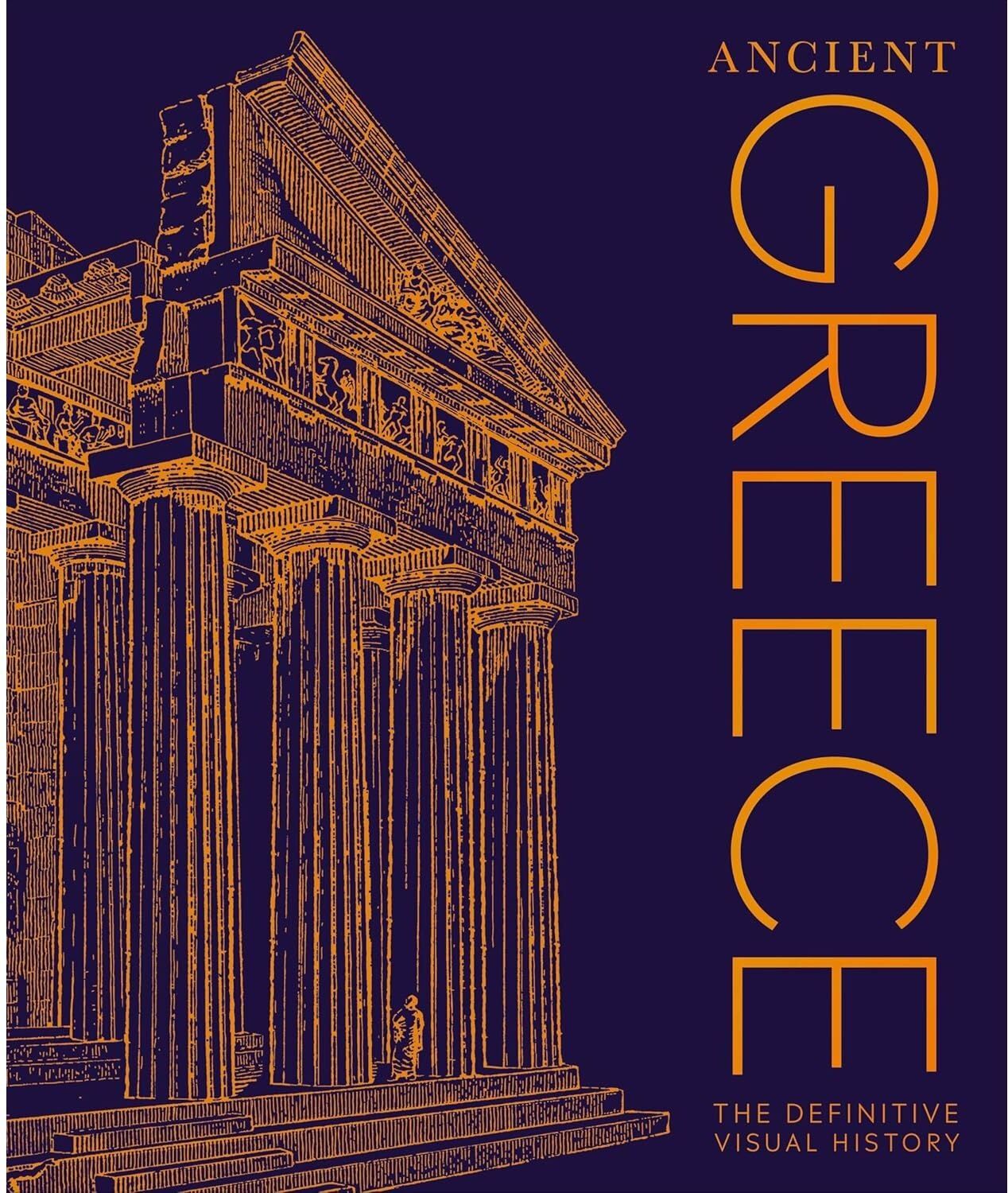
Ancient Greece: The Definitive Visual History (DK Classic History)Embark upon a fascinating journey through ancient Greece – from its rise and fall to its lasting legacy throughout the Western world. Spanning more than 3,000 years, Ancient Greece explores the tumultuous history of this glorious empire in vivid detail – from its Minoan and Mycenaean origins to the apogee of the warring city-states of Athens and Sparta, and from the death of its most charismatic leader, Alexander the Great, to its ultimate defeat by Rome. Sumptuous photography and authoritative, engaging text cover every facet of life in ancient Greece, from art, entertainment, and schools of thought to politics, medicine, and war, while the myths and religious beliefs of the ancient culture are explored and explained in depth. Greece’s military and political power shines through in fascinating maps of its legendary battles. Buried palaces and the Athenian Agora where Plato and Socrates discussed philosophy are brought back to life with stunning CGI artworks. And the stories of everyone from ordinary citizens to lawmakers and the first Olympic athletes are retold through eyewitness accounts and original artefacts.19,99 £*Shipping: 2,99 £Secure redirect to the provider
-
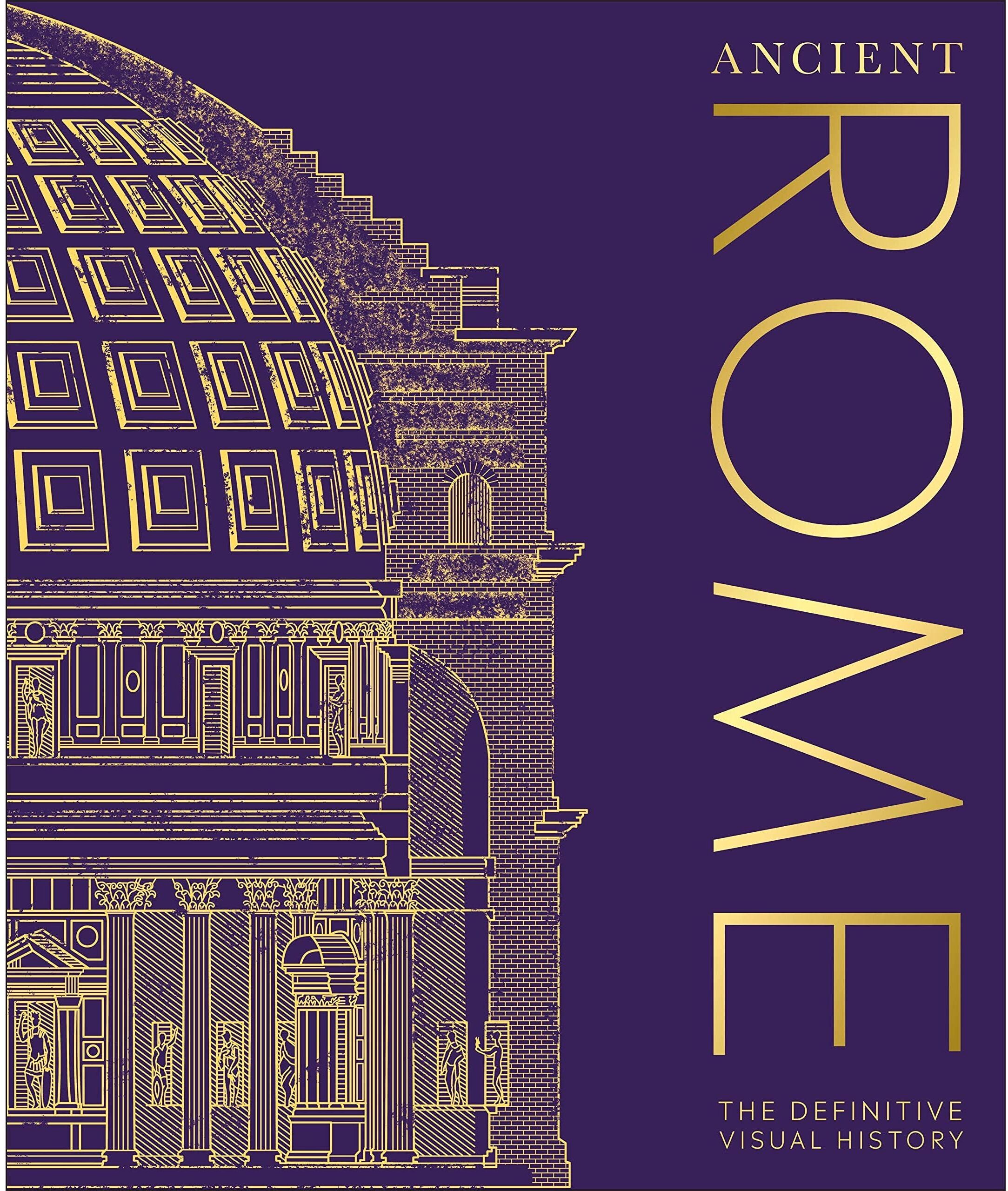
Ancient Rome: The Definitive Visual History (DK Classic History)Immerse yourself in the history of ancient Rome - from its origins as a small settlement on the Palatine Hill to its peak as an empire reigning over 90 million people, and its tumultuous decline. Covering more than 1,000 years of history, and an empire that stretched from Scotland to Syria, Ancient Rome reveals in vivid detail all of the key political, cultural, and military events that shaped the Roman Empire and explores what it was like to live in a society that laid the foundations for many aspects of the modern world. Sumptuous photography and engaging text cover every facet of life in ancient Rome, from art, entertainment, and fashion to engineering, medicine, and war, while detailed maps trace the rise of the mighty Roman Empire. Step back in time in the pages of this history book to discover:- Themed spreads explore developments in areas such as sculpture, religion, warfare, and engineering. - Includes tales of the most dramatic events and battles in Roman history, as well as profiles of influential historical and cultural figures. - An optional 80pp reference section includes sections on rulers, gods and goddesses, and key sites. Featuring Rome's greatest emperors, from Augustus to Constantine, as well as profiles of generals, historians, and influential women, Ancient Rome also delves into the fascinating stories of gladiators, bakers, and enslaved people. The most iconic buildings of Rome are brought to life with specially commissioned CGI recreations, while the stories of ordinary citizens, soldiers, and persecuted groups from across the empire are told with the help of illustrations, artefacts, and eyewitness accounts. Beautifully illustrated and unparalleled in scope, Ancient Rome is the perfect book for anyone who is interested in this defining period of world history.19,95 £*Shipping: 2,99 £Secure redirect to the provider
-
Does studying mathematics involve learning a programming language?
Studying mathematics does not necessarily involve learning a programming language. While some branches of mathematics, such as computational mathematics or numerical analysis, may require knowledge of programming languages like Python or MATLAB for data analysis and simulations, the core concepts of mathematics can be studied and understood without programming. However, learning a programming language can be a valuable skill for mathematicians as it can aid in solving complex problems and conducting mathematical research efficiently. **
-
Business mathematics or pure mathematics?
It ultimately depends on your career goals and interests. Business mathematics focuses on practical applications in business and finance, such as accounting, economics, and statistics. Pure mathematics, on the other hand, delves into theoretical concepts and abstract reasoning, with applications in fields like physics, engineering, and computer science. If you are interested in pursuing a career in business or finance, business mathematics may be more relevant. However, if you are passionate about theoretical concepts and problem-solving, pure mathematics may be a better fit for you. **
-
Were there fundamental errors in the history of mathematics?
Yes, there have been fundamental errors in the history of mathematics. One famous example is the case of Euclid's fifth postulate, which was later shown to be independent of the other postulates in Euclidean geometry. This led to the development of non-Euclidean geometries. Additionally, there have been instances of incorrect proofs and assumptions made by mathematicians throughout history, which have later been corrected or disproven. These errors have often led to advancements in the field as mathematicians work to correct and improve upon previous work. **
-
What is the history of the equation in mathematics?
The history of the equation in mathematics dates back to ancient civilizations such as the Babylonians and Egyptians, who used equations to solve practical problems related to trade, construction, and astronomy. The concept of equations was further developed by Greek mathematicians, such as Diophantus and Euclid, and later by Islamic mathematicians during the Golden Age of Islam. In the 16th century, the Italian mathematician, Rafael Bombelli, made significant contributions to the understanding of complex numbers and their use in solving equations. The development of algebra in the 17th and 18th centuries further advanced the study of equations, leading to the development of various methods for solving them, such as the quadratic formula and the method of substitution. Today, equations are a fundamental part of mathematics and are used in various fields such as physics, engineering, and economics. **
* All prices are inclusive of VAT and, if applicable, plus shipping costs. The offer information is based on the details provided by the respective shop and is updated through automated processes. Real-time updates do not occur, so deviations can occur in individual cases. ** Note: Parts of this content were created by AI.